Key Takeaways
- The Marseille Metro is one of the fastest and easiest ways to get around the city.
- It consists of two fully automated lines connecting many of Marseille’s main districts and attractions.
- The metro links universities, train stations, shopping areas and the Old Port, making it an essential part of student life.
- Combined with buses, trams and bicycles, it allows students to explore Marseille without needing a car.
- Learning how to use the metro during your first few days in Marseille will make everyday life much easier.
Getting Around Marseille Made Easy
Moving to a new city always comes with a learning curve.
Where should you live? How long will it take to get to campus? Which neighbourhoods are easiest to reach? And perhaps most importantly, how do you get around efficiently without spending a fortune?
Fortunately, Marseille has an extensive public transport network, and at the heart of it is the Marseille Metro.
Whether you’re travelling to university, meeting friends at the Vieux-Port, heading to the beach after class or catching a train for a weekend in Provence, the metro will quickly become part of your daily routine.
Fast, reliable and easy to navigate, it’s one of the first things every international student should become familiar with after arriving in Marseille.
A Simple Network That’s Easy to Understand
Unlike the sprawling metro systems of Paris or London, Marseille’s network is refreshingly straightforward.
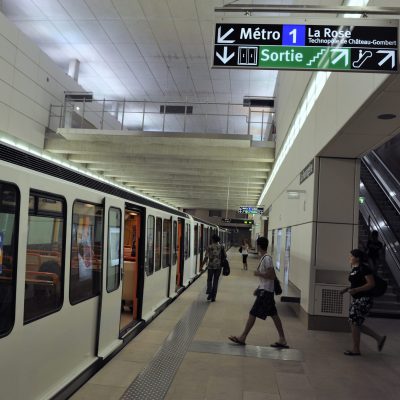
The system consists of just two metro lines, making it easy for newcomers to understand after only a few journeys.
Line M1 runs from east to west, connecting neighbourhoods such as La Rose, Saint-Charles railway station, the Vieux-Port and La Fourragère.
Line M2 travels from north to south, linking Gèze with Sainte-Marguerite Dromel and serving important areas including Castellane, Noailles and Joliette.
The two lines intersect at Saint-Charles and Castellane, allowing passengers to change lines quickly when travelling across the city.
Because the network is compact and well signposted, it’s difficult to get lost—even if it’s your first week in Marseille.
Connecting Students to the City
One of the strengths of the Marseille Metro is how well it connects many of the places students visit most often.
Depending on where you study, the metro provides convenient access to:
- Marseille Saint-Charles railway station
- The Vieux-Port
- La Canebière
- Noailles
- Castellane
- Euroméditerranée
- Joliette
- The Orange Vélodrome
- Shopping centres, cafés and cultural venues throughout the city
Many university campuses are also accessible by combining the metro with buses or trams.
This makes commuting straightforward, even if you choose to live in a different neighbourhood from your campus.
A Fully Automated Metro
One feature that surprises many visitors is that Marseille operates one of France’s fully automated metro systems.
Modern trains run without drivers, allowing services to operate efficiently throughout the day.
Stations are generally clean, well-lit and equipped with ticket machines, digital information displays and clear signage.
The metro’s frequency means you rarely need to wait long for the next train, particularly during peak hours.
For students balancing lectures, internships and social activities, this reliability makes daily travel much less stressful.
An Affordable Way to Travel
Living abroad means managing your budget carefully.
Public transport is significantly cheaper than relying on taxis or owning a car, especially in a city where parking can be limited.
Students can benefit from discounted public transport passes, making unlimited travel across Marseille even more affordable.
If you plan to use public transport regularly—which most students do—a monthly or annual subscription usually offers the best value.
Combined with buses and trams, a single transport pass allows you to move around much of the metropolitan area with ease.
Beyond the Metro
Although the metro is incredibly useful, it represents only one part of Marseille’s transport network.
Depending on where you’re going, you may also use:
- Trams connecting several central districts
- An extensive bus network
- Ferries across the Old Port
- Regional trains to nearby cities
- Public bicycle-sharing services
- Electric scooters available throughout the city
Many students combine different modes of transport depending on the time of day and their destination.
For example, you might take the metro to Castellane before catching a bus to Prado Beach, or travel to Saint-Charles Station by metro before taking a train to Aix-en-Provence or Avignon.
Safety and Everyday Tips
Like any major city, Marseille’s public transport is generally safe but requires the usual precautions.
Keep your personal belongings close to you, especially during busy periods, and remain aware of your surroundings in crowded stations.
Most stations are equipped with surveillance cameras and are regularly monitored.
If you’re travelling late at night, waiting in well-lit areas and travelling with friends whenever possible are sensible habits.
During your first few weeks, using a navigation app can also help you become familiar with stations and connections until the network becomes second nature.
Why Students Quickly Love the Metro
One of the biggest advantages of studying in Marseille is how much of the city becomes accessible without needing a car.
Within a single afternoon, you can attend lectures, have lunch at the Old Port, visit a museum in Joliette, meet friends in Castellane and finish the day watching the sunset near the Mediterranean.
The metro makes this possible.
It’s fast enough to save time, simple enough for newcomers to master quickly and affordable enough for student budgets.
Perhaps that’s why, after only a few weeks in Marseille, most international students stop checking maps altogether.
They simply know where to go.
Practical Information
Metro services generally operate from early morning until late evening, with extended hours on certain evenings and during special events.
Tickets can be purchased at station machines, while rechargeable transport cards make regular travel more convenient.
Most stations include maps of the entire transport network, helping new arrivals understand connections with buses and trams.
If you’re planning to stay in Marseille for several months, applying for a student transport pass is usually the most economical solution.
One of the Keys to Enjoying Student Life in Marseille
Choosing to study abroad means embracing independence.
Learning how to navigate your new city is one of the first steps towards feeling at home.
The Marseille Metro may seem like a simple transport system, but it quickly becomes part of your everyday life.
It takes you to university, introduces you to new neighbourhoods, helps you discover local restaurants, brings you to concerts and football matches, and makes spontaneous weekend adventures possible.
Before long, you’ll find yourself recognising station names without thinking, recommending the quickest routes to visiting friends and realising that Marseille no longer feels like a city you’re visiting.
It feels like your city.
Frequently Asked Questions
How many metro lines does Marseille have?
The Marseille Metro currently has two lines covering many of the city’s main districts and transport hubs.
Is the Marseille Metro easy to use?
Yes. The network is relatively small, well signposted and easy to understand, making it ideal for international students and first-time visitors.
Can students get discounted transport passes?
Yes. Students are eligible for reduced fares through the local public transport operator, making regular travel more affordable.
Does the metro reach the beaches?
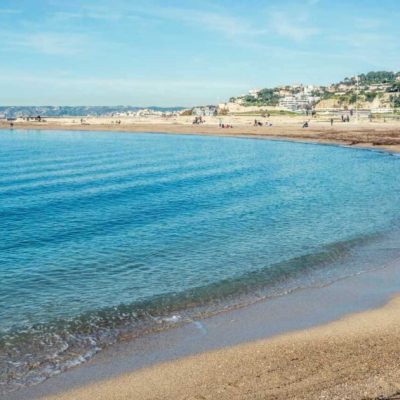
Not directly. However, the metro connects easily with bus routes serving the Prado Beaches and other parts of Marseille’s coastline.
Do I need a car to live in Marseille?
For most students, no. The combination of metro, buses, trams, trains and cycling infrastructure makes it easy to live, study and explore the city without owning a car.