Key Takeaways
- Fontaine-de-Vaucluse is one of the most spectacular natural sites in Provence, located around 90 minutes from Marseille.
- The village is famous for its crystal-clear spring, one of the largest natural springs in the world.
- Surrounded by limestone cliffs and lush greenery, it offers a peaceful escape from city life.
- The destination combines nature, history and Provençal charm, making it ideal for a day trip.
- For international students, Fontaine-de-Vaucluse is the perfect opportunity to discover a different side of southern France.
Escape the City and Discover Provence
One of the greatest advantages of studying in Marseille is that some of France’s most beautiful landscapes are only a short journey away.
While Marseille offers beaches, museums and vibrant city life, Provence is also home to picturesque villages, vineyards, mountains and rivers that seem untouched by time.
Among these hidden gems, Fontaine-de-Vaucluse is undoubtedly one of the most impressive.
Nestled at the foot of towering limestone cliffs, this charming village attracts visitors from around the world thanks to an extraordinary natural phenomenon: an immense spring emerging directly from the rock.
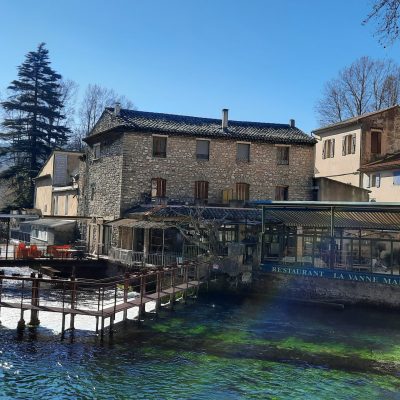
The setting feels almost magical. Clear turquoise water flows through the village before joining the River Sorgue, creating one of the most peaceful landscapes in Provence.
Whether you’re looking for a relaxing weekend, beautiful photography or simply a break from university life, Fontaine-de-Vaucluse is a destination worth discovering.
One of the World’s Largest Natural Springs
The village owes its fame to its remarkable spring.
Known as the Fontaine de Vaucluse, it is the source of the River Sorgue and one of the largest karst springs on Earth.
Millions of litres of water emerge from an underground network of caves every day, fed by rainfall and snowmelt from the surrounding mountains.
The exact depth of the spring remained a mystery for centuries.
Explorers, divers and scientists attempted to reach its source for decades before modern technology finally revealed an underground system extending hundreds of metres below the surface.
Even today, the spring continues to fascinate hydrologists and visitors alike.
Standing beside its crystal-clear waters, it’s easy to understand why.
A Village Full of Provençal Charm
Beyond the famous spring, Fontaine-de-Vaucluse is a delightful village to explore.
Stone houses line the riverbanks, shaded cafés overlook the water and narrow streets invite visitors to slow down and enjoy the relaxed pace of Provençal life.
Unlike larger tourist destinations, the village has preserved an authentic atmosphere.
You’ll find artisan shops selling local products, small galleries featuring regional artists and restaurants serving traditional Provençal cuisine.
The constant sound of flowing water creates a peaceful environment that feels worlds away from the busy streets of Marseille.
Following in the Footsteps of Petrarch
Fontaine-de-Vaucluse also occupies an important place in European literary history.
The Italian poet Francesco Petrarch, considered one of the fathers of Renaissance humanism, spent many years living in the village during the 14th century.
Inspired by the surrounding landscape, he wrote some of his most celebrated works here, helping to make Fontaine-de-Vaucluse famous long before modern tourism existed.
Today, visitors can discover a museum dedicated to Petrarch and learn more about the writer’s connection to Provence.
For literature lovers, it adds another fascinating dimension to the visit.
Walking Through Nature
One of the highlights of Fontaine-de-Vaucluse is the pleasant riverside walk leading to the spring.
The route follows the emerald-green waters of the Sorgue beneath tall trees and dramatic limestone cliffs.
Along the way, visitors encounter old water wheels, historic mills and small terraces overlooking the river.
It’s an easy walk suitable for almost everyone, making it an ideal excursion whether you’re travelling alone or with friends.
The closer you get to the spring, the more impressive the scenery becomes.
The immense cliff rising behind the emerald pool creates one of Provence’s most iconic landscapes.
Why International Students Should Visit
Studying abroad isn’t only about discovering famous cities.
It’s also about exploring the landscapes and traditions that define a region.
Fontaine-de-Vaucluse offers a completely different experience from Marseille.
Instead of busy streets and lively cafés, you’ll find peaceful rivers, forests, historic villages and fresh mountain air.
It’s the perfect destination when you need a break from exams, assignments or city life.
Many students find that spending a day surrounded by nature helps them return to university feeling refreshed and inspired.
Easy to Combine with Other Provençal Destinations
Another reason Fontaine-de-Vaucluse makes such an excellent excursion is its location.
Many visitors combine it with nearby villages such as L’Isle-sur-la-Sorgue, famous for its canals and antique markets, or Gordes, one of the most beautiful hilltop villages in France.
Exploring several villages in one day allows you to experience the incredible diversity of Provence, from peaceful riverside landscapes to panoramic mountain viewpoints.
If you have a full weekend available, this part of the region offers countless opportunities for hiking, cycling and discovering local gastronomy.
Practical Tips
The best times to visit are spring and early autumn, when temperatures are comfortable and the surrounding vegetation is at its most vibrant.
Comfortable walking shoes are recommended, particularly if you plan to explore the paths leading towards the spring and nearby viewpoints.
Arriving early in the morning allows you to enjoy the village before larger crowds arrive, especially during the summer months.
Don’t forget your camera—the combination of turquoise water, limestone cliffs and traditional Provençal architecture makes Fontaine-de-Vaucluse one of the most photogenic destinations in southern France.
A Different Side of Southern France
It’s easy to think of Provence as sunshine, lavender fields and beaches.
Fontaine-de-Vaucluse reminds visitors that the region also hides extraordinary natural landscapes shaped over millions of years.
The village combines geology, history, literature and local culture in a way that feels authentic rather than staged.
For international students living in Marseille, it’s an opportunity to discover another face of Provence—one that is quieter, greener and deeply connected to nature.
Sometimes, the most memorable experiences during your studies abroad aren’t found in the biggest cities.
They’re found in places where the only sound is flowing water, where time seems to slow down, and where the beauty of nature speaks for itself.
Frequently Asked Questions
Where is Fontaine-de-Vaucluse?
The village is located in the Vaucluse department of Provence, approximately 90 kilometres north of Marseille.
Why is Fontaine-de-Vaucluse famous?
It is home to one of the world’s largest natural springs, whose crystal-clear waters emerge from a spectacular limestone cliff.
Is Fontaine-de-Vaucluse worth visiting as a day trip from Marseille?
Yes. It is an excellent day-trip destination, offering beautiful scenery, history and Provençal charm within easy reach of Marseille.
Can you swim in the spring?
Swimming is not permitted in the spring itself in order to protect this exceptional natural environment.
What else can I visit nearby?
Many visitors combine Fontaine-de-Vaucluse with L’Isle-sur-la-Sorgue, Gordes or the surrounding Luberon villages for a full day exploring Provence.