Key Takeaways
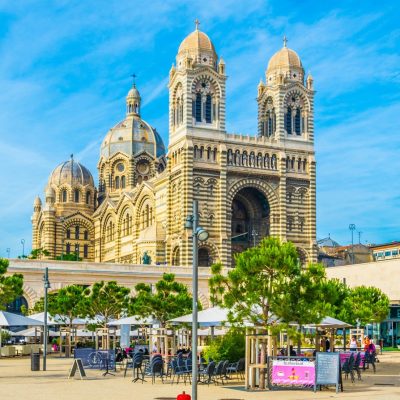
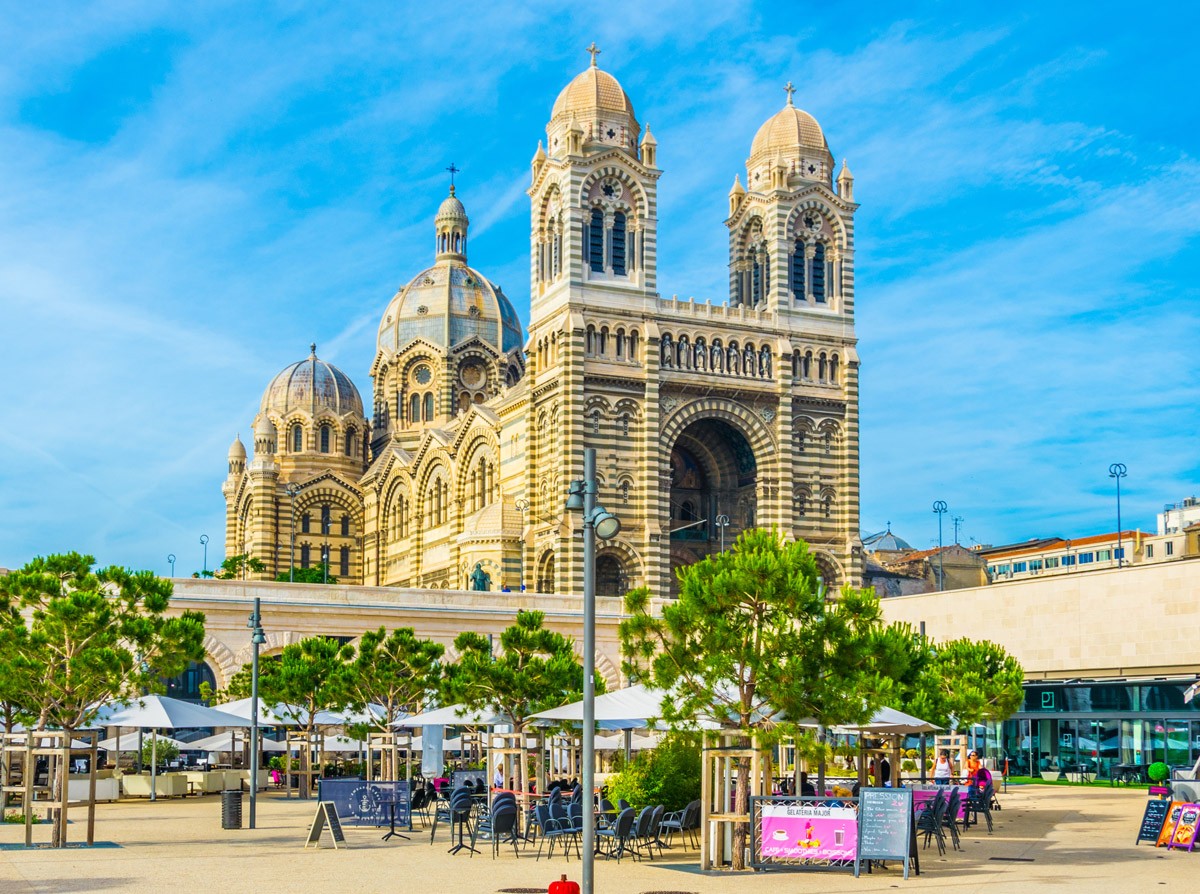
- Marseille Cathedral, commonly known as La Major, is one of the city’s most iconic landmarks.
- Built in the 19th century, it is one of the largest cathedrals constructed in France since the Middle Ages.
- Located between the Old Port and the Mediterranean, it combines Romanesque and Byzantine architectural styles.
- Its striped stone façade and impressive domes make it one of Marseille’s most recognizable buildings.
- Visiting La Major offers international students a deeper understanding of Marseille’s history, architecture and multicultural identity.
One of Marseille’s Most Impressive Landmarks
Whether you’re arriving by cruise ship, exploring the Old Port or walking through the historic district of Le Panier, one building immediately catches your attention.
With its monumental domes, striped stone walls and commanding position overlooking the Mediterranean, Marseille Cathedral, better known as La Major, is impossible to miss.
It’s one of the city’s most iconic monuments and one of the first landmarks many visitors photograph.
But beyond its spectacular appearance, La Major tells an important chapter of Marseille’s story.
Standing at the crossroads between Europe and the Mediterranean, it reflects the city’s long history as a place where cultures, religions and civilizations have met for more than two thousand years.
For international students, it’s much more than a beautiful church.
It’s a symbol of Marseille itself.
Built for a Growing Mediterranean City
Although Christianity has been present on this site since the early centuries of Marseille’s history, the cathedral visible today is relatively recent.
Construction began in 1852 under the reign of Napoleon III, replacing the medieval cathedral that had become too small for the rapidly expanding city.
At the time, Marseille was experiencing extraordinary economic growth.
Its port had become one of Europe’s busiest, trade with North Africa and the Middle East was flourishing, and the population was increasing rapidly.
The city wanted a cathedral worthy of its growing importance.
The result was La Major, an ambitious architectural project unlike anything previously built in Marseille.
Completed in 1896 after more than forty years of construction, it remains one of France’s largest cathedrals.
A Unique Architectural Style
One of the reasons La Major is so distinctive is its architecture.
Rather than following the Gothic style commonly associated with many French cathedrals, the architects chose a combination of Romanesque Revival and Byzantine Revival influences.
The alternating bands of white limestone and green stone immediately give the cathedral its unmistakable appearance.
Its massive central dome rises above four smaller domes, while elegant arches, richly decorated façades and intricate carvings add remarkable detail throughout the building.
The design was inspired by churches found across the Mediterranean, perfectly reflecting Marseille’s role as a gateway between Europe and the East.
It’s an architectural style that feels both French and unmistakably Mediterranean.
An Interior Filled with Light
Stepping inside La Major offers a completely different experience.
The cathedral’s vast interior creates an immediate sense of calm.
High ceilings, elegant columns and colourful marble combine with natural light filtering through the windows to create an atmosphere that feels peaceful despite the building’s enormous scale.
Unlike some historic churches filled with dark stone, La Major feels bright and open.
Visitors often spend time simply admiring the architecture or sitting quietly beneath the domes.
Whether you’re interested in religion or not, the building offers a moment of tranquillity in the heart of one of France’s busiest cities.
A Perfect Location Overlooking the Sea
Few cathedrals enjoy such an extraordinary setting.
La Major stands directly beside the Mediterranean, facing the entrance to Marseille’s harbour.
For centuries, this part of the city welcomed merchants, sailors and travellers arriving from every corner of the Mediterranean.
Today, ferries, yachts and cruise ships continue to pass just beyond the cathedral’s walls.
From the square surrounding the building, you’ll enjoy beautiful views towards:
- The Old Port
- Mucem
- Fort Saint-Jean
- The Mediterranean Sea
- The cruise terminals
- Le Panier
- Hôtel Dieu
It’s one of the best places in Marseille to appreciate how closely the city has always been connected to the sea.
Why International Students Should Visit
Studying abroad is also about understanding the place where you’re living.
La Major helps explain why Marseille feels different from many other French cities.
Its architecture reflects influences from across the Mediterranean.
Its location illustrates the city’s centuries-old maritime tradition.
Its history demonstrates Marseille’s rapid growth during the nineteenth century.
Walking through the cathedral allows students to better understand how geography, trade and cultural exchange have shaped the city’s identity.
It’s a reminder that Marseille has never been isolated.
It has always looked towards the sea.
Easily Combined with Other Attractions
One of the advantages of visiting La Major is its central location.
Within just a few minutes’ walk, you can explore several of Marseille’s most important landmarks, including:
- Mucem
- Fort Saint-Jean
- Le Panier
- Hôtel de Ville
- Hôtel Dieu
- The Old Port
- Les Terrasses du Port
Many visitors include the cathedral as part of a half-day walking itinerary through Marseille’s historic centre.
Because everything is located so close together, it’s easy to experience several centuries of history in a single afternoon.
Practical Tips
Entry to the cathedral is free, making it one of Marseille’s most accessible cultural attractions.
Morning visits offer beautiful natural light inside the building, while late afternoon provides spectacular photography opportunities as the sun illuminates the striped stone façade.
Take time to walk around the exterior as well.
Each side of the cathedral offers different perspectives over the city and the Mediterranean.
If possible, combine your visit with Mucem and Fort Saint-Jean, both located just a short walk away.
Together, they tell the story of Marseille from ancient times to the present day.
A Symbol of Marseille’s Mediterranean Identity
Some monuments represent religion.
Others represent architecture.
La Major represents Marseille.
Its monumental silhouette welcomes visitors arriving by sea.
Its architecture celebrates centuries of cultural exchange across the Mediterranean.
Its location connects the city’s historic centre with its modern waterfront.
For international students, visiting La Major isn’t simply another sightseeing stop.
It’s an opportunity to understand why Marseille has always been one of Europe’s most open, diverse and internationally connected cities.
Standing beneath its domes, looking out towards the sea, it’s easy to imagine the countless travellers who have arrived here before you—and to realise that, in your own way, you’ve now become part of Marseille’s continuing story.
Frequently Asked Questions
Where is Marseille Cathedral located?
La Major is located on the waterfront between Le Panier, Mucem and the Old Port, overlooking the Mediterranean.
Why is Marseille Cathedral called La Major?
The name comes from the medieval cathedral that previously occupied the site, traditionally known as “La Major.”
Is La Major free to visit?
Yes. Entry to the cathedral is free, although donations are welcome to help preserve the building.
How long should I spend visiting?
Most visitors spend between 45 minutes and 1.5 hours exploring the cathedral and the surrounding waterfront.
Why should international students visit La Major?
It offers a unique combination of history, architecture and panoramic views while illustrating Marseille’s deep connection with the Mediterranean and its multicultural heritage.