Key Takeaways
- The Château d’If is one of Marseille’s most iconic historical landmarks.
- Located just 20 minutes by boat from the Vieux-Port, it makes for an easy and affordable day trip.
- The fortress became world-famous thanks to The Count of Monte Cristo by Alexandre Dumas.
- It offers spectacular views of Marseille and the Mediterranean Sea.
- Visiting the Château d’If is one of the best ways to discover Marseille’s maritime history and cultural identity.
Discover a Different Side of Marseille
When most international students first arrive in Marseille, they naturally head towards the Vieux-Port, Notre-Dame de la Garde or the beaches. These landmarks are essential, but there is another place that tells one of the city’s most fascinating stories: the Château d’If.
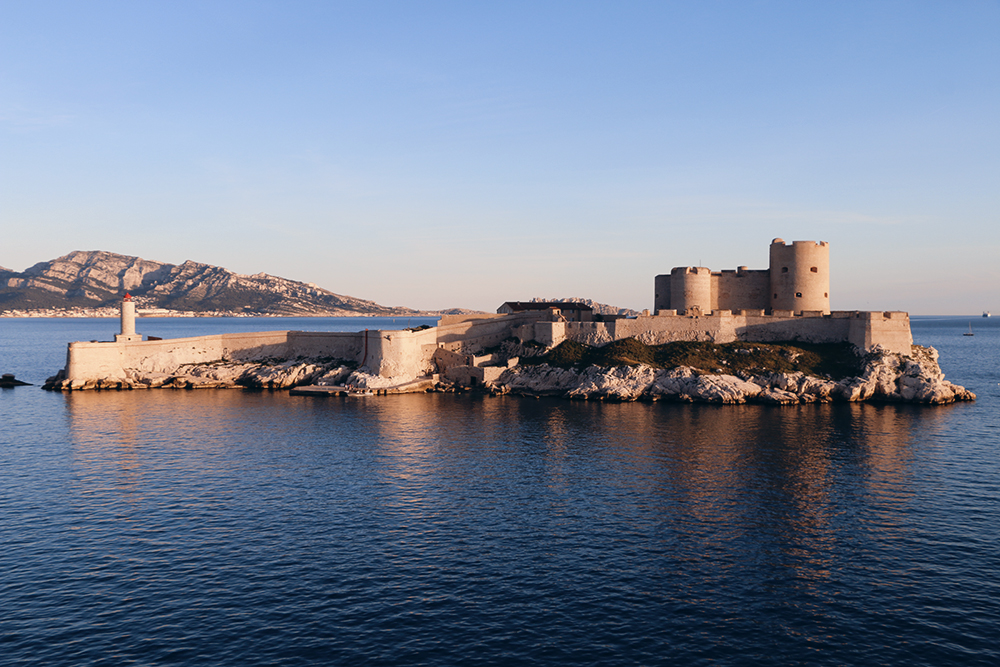
Standing proudly on a small rocky island just off the coast, this impressive fortress has watched over Marseille for nearly 500 years. It has served as a military stronghold, a prison and, today, one of France’s most remarkable historical monuments.
Visiting the Château d’If isn’t simply about ticking another attraction off your list. It offers a deeper understanding of Marseille’s history, its relationship with the Mediterranean and the events that shaped one of Europe’s oldest cities.
A Fortress Built to Protect Marseille
Construction of the Château d’If began in 1524 under the orders of King Francis I. At the time, Marseille was already one of the Mediterranean’s most strategic ports, making the protection of its harbour a national priority.
The fortress was built on the island of If, perfectly positioned to monitor ships entering the bay. Its thick limestone walls and elevated position were designed to discourage any enemy fleet from attacking the city.
Although the fortress was never truly tested during a major military invasion, it quickly found another purpose that would make it famous throughout Europe.
One of France’s Most Notorious Prisons
Only a few years after its construction, the Château d’If became a state prison.
Its isolated location made escape almost impossible. Surrounded by strong currents and open sea, prisoners had little hope of reaching the mainland alive.
Over the centuries, political prisoners, religious dissidents and individuals considered enemies of the Crown were imprisoned within its walls.
Not every prisoner experienced the fortress in the same way. Wealthier inmates could afford relatively comfortable rooms with windows overlooking the sea, while poorer prisoners were confined to dark, damp cells deep inside the fortress.
Today, visitors can still explore these prison cells and discover how dramatically living conditions varied depending on a prisoner’s social status.
The Legend of The Count of Monte Cristo
The Château d’If became internationally famous thanks to Alexandre Dumas’ masterpiece, The Count of Monte Cristo.
In the novel, Edmond Dantès is falsely accused of treason and imprisoned inside the fortress before making his legendary escape and seeking justice against those who betrayed him.
Although Edmond Dantès never existed, the story transformed the Château d’If into one of the world’s best-known literary landmarks.
Visitors can even see the prison cell inspired by the novel, making this historic site particularly appealing to literature enthusiasts from every corner of the world.
The Journey Is Part of the Experience
One of the best things about visiting the Château d’If is that the adventure begins before you even arrive.
Ferries depart from Marseille’s historic Vieux-Port several times a day. The crossing takes around twenty minutes and offers spectacular panoramic views of the city.
As the boat moves away from the harbour, you’ll enjoy a completely different perspective of Marseille.
Notre-Dame de la Garde dominates the skyline, the colourful waterfront stretches along the coast, while the Frioul Islands and the deep blue Mediterranean create an unforgettable landscape.
Many visitors consider the boat trip itself to be one of the highlights of the excursion.
Why International Students Should Visit
Studying abroad is about much more than attending lectures and passing exams.
Living in Marseille means discovering the culture, history and traditions that make the city unique.
The Château d’If provides exactly that opportunity.
It’s an affordable excursion, easy to organise during a weekend or even a free afternoon, and it offers an experience that combines history, literature, architecture and breathtaking scenery.
It’s also one of the city’s most photogenic locations, making it a favourite destination for students looking to explore Marseille with friends or visiting family.
Perhaps most importantly, the fortress helps newcomers better understand the city’s maritime identity.
From the island, Marseille suddenly appears in a completely different light. Looking back towards the coast, it’s easy to appreciate why this natural harbour became one of Europe’s oldest and most influential trading ports.
Practical Tips for Your Visit
Before planning your trip, it’s worth checking the ferry timetable, especially during winter or periods of strong winds when crossings may occasionally be cancelled.
Wear comfortable shoes, as exploring the fortress involves climbing several staircases and walking across uneven stone surfaces.
During spring and summer, don’t forget sunscreen, sunglasses and plenty of water, as there is very little shade on the island.
If your schedule allows, consider combining your visit with the nearby Frioul Islands. Their walking trails, beaches and peaceful atmosphere make them the perfect complement to a visit to the Château d’If.
A Place That Helps You Understand Marseille
Every city has its monuments, but only a few have places capable of telling their story as vividly as the Château d’If.
From its military origins to its years as one of France’s most famous prisons and its role in one of literature’s greatest novels, the fortress perfectly illustrates Marseille’s rich and complex history.
For international students, visiting the Château d’If is far more than a tourist activity. It’s an opportunity to connect with the city’s identity, discover its maritime heritage and experience one of the landscapes that has inspired travellers, artists and writers for centuries.
Long after graduation, many memories of studying abroad begin to fade.
Watching Marseille emerge on the horizon as your boat returns from the Château d’If is unlikely to be one of them.
Frequently Asked Questions
How do you get to the Château d’If?
Regular ferry services depart from Marseille’s Vieux-Port throughout the year. The crossing takes approximately twenty minutes.
How much time should I allow for the visit?
Most visitors spend between two and three hours exploring the fortress. If you also plan to visit the Frioul Islands, allow at least half a day.
Is the Château d’If worth visiting if I haven’t read The Count of Monte Cristo?
Absolutely. The fortress is fascinating for its real history, exceptional architecture and spectacular views, regardless of your familiarity with the novel.
Is it suitable for students on a budget?
Yes. Ferry tickets and entrance fees are reasonably priced, making it one of Marseille’s best-value cultural experiences.
What else can I visit nearby?
Many visitors combine the Château d’If with the Frioul Islands, the Vieux-Port, Le Panier or Notre-Dame de la Garde to enjoy a full day discovering Marseille.